

If you live with joint pain or arthritis—whether it’s osteoarthritis, rheumatoid arthritis (RA), or gout—you know how much it can disrupt daily life. Old injuries, inflammation, and even hidden factors in your body (that you might not have heard of!) can make symptoms worse. But here’s the good news: what you eat plays a huge role in either fueling that inflammation or calming it down.
Today, we’re breaking down the science (in simple terms!) behind arthritis and inflammation, the 7 worst foods to cut out, and the best foods to add to your diet to support your joints. Let’s dive in.
First: The Science Behind Arthritis & Inflammation (You Need to Know This!)
Before we talk food, let’s cover a few key basics to help you understand why certain foods matter. It all starts with your cells—and two surprising players: chondrocytes and bile salts.
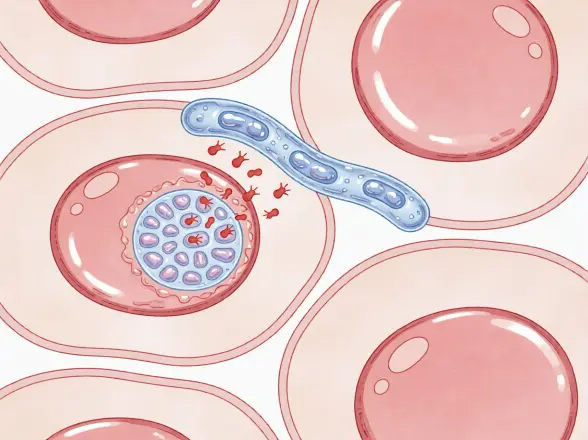
Chondrocytes: Your Joint’s Building Blocks
Chondrocytes are the cells that make up your cartilage—the soft, cushioning tissue in your joints. When these cells are stressed or damaged, inflammation kicks in, and arthritis pain follows. One major source of that stress? The endoplasmic reticulum (ER), a “factory” inside your cells that folds proteins (think of folding a paper airplane—if it’s folded wrong, it won’t work!). When the ER is stressed, it triggers a cascade of inflammation, even before other cell damage happens.
Bile Salts: The Unexpected Anti-Inflammatory
You probably think of bile salts as something your gallbladder uses to digest fat—and that’s true! But there’s a second type of bile (called secondary bile salts) made by your gut microbes that does something amazing: it acts as a potent anti-inflammatory in your joints. These bile salts enter your bloodstream, travel to your joints, and protect cartilage while reducing inflammation.
Here’s the kicker: if your gut microbiome is out of balance (from bad food!), you won’t make enough of these helpful bile salts. That’s where the gut-joint axis comes in—your gut health directly impacts your joint health. And one special bile salt supplement, Tutka (synthetic bear bile, no bears harmed!), even reduces ER stress, making it a powerful tool for arthritis relief.
Other Key Nutrients for Joint Health
- Vitamin K2: Prevents calcium from building up in soft tissues (like joints), which can cause calcification and painful spurs. It’s found in high-fat foods—more on that later!
- Vitamin D: Critical for calming inflammation, especially in RA (an autoimmune disease where your immune system attacks your joints). Most people need high, therapeutic doses (20,000+ IU daily) to see results—pair it with magnesium, zinc, and vitamin K2 for best effects.
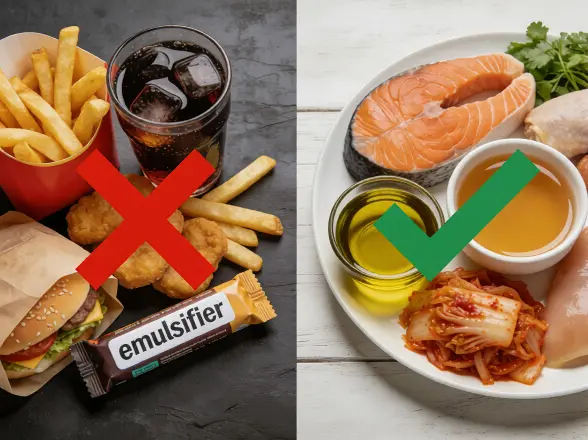
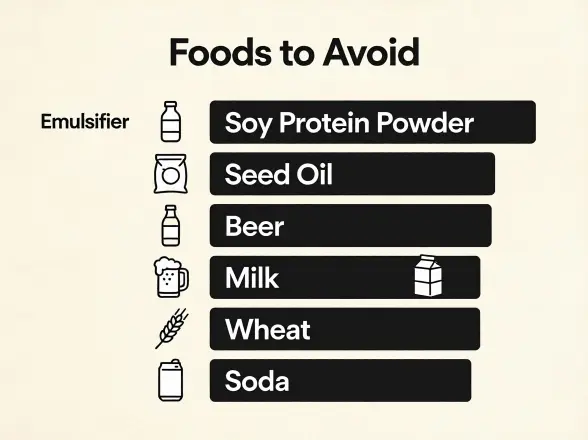
The 7 Worst Foods for Arthritis (Cut These Out!)
These foods (and ingredients) disrupt your gut microbiome, stress your cells, and fuel inflammation—making joint pain worse. Many are hidden in processed foods, so read labels closely!
1. Emulsifiers (e.g., Polyorbate 80)
Emulsifiers mix ingredients to make foods creamy (think frozen desserts, creamy dressings, and processed snacks). They wreck your gut microbiome—remember, a healthy microbiome makes the bile salts your joints need! Cutting these out can reduce joint inflammation significantly.
2. Low-Fat Soy Protein Powder
Found in some protein bars and plant-based supplements, low-fat soy isolate is an industrial protein that messes with your liver. It’s low in taurine—a nutrient needed to make bile—and may contain hexane (a harmful solvent). Vegans and vegetarians are especially at risk for taurine deficiency, which leads to bile shortages and worse arthritis.
3. Refined Seed Oils
Most seed oils (soybean, canola, corn, sunflower) sold in stores are refined, bleached, and heated to extremely high temperatures (up to 570°F!). This creates byproducts called aldehydes, which damage joints, arteries, and cells. While cold-pressed seed oils are better, the refined versions in fast food, fried foods, and processed snacks are major inflammation triggers.
4. Alcohol (Especially Beer)
Beer is the worst offender—it’s high in purines (which cause gout flare-ups) and carbs (which spike blood sugar and inflammation). Wine and hard liquor are also harmful because they damage your liver—and a damaged liver can’t make healthy bile, leading to more joint pain.
5. Casein A1 Protein
Commercial cow’s milk (from grain-fed cows) contains casein A1, a protein that flares joint pain. It’s often concentrated in sodium caseinate, calcium caseinate (found in protein bars and cheap powders), and processed cheeses (like American cheese). Opt for A2 milk/cheese (from grass-fed cows, sheep, or goats) instead— it’s much gentler on joints.
6. Modern Wheat
Compared to ancient grains, modern wheat is a nightmare for joints. It contains: Amylopectin A: A high-glycemic starch that spikes blood sugar higher than sugar itself.Wheat Germ Agglutinin (WGA): Almost as inflammatory as gluten, it damages the gut lining and causes leaky gut.Glyphosate: An herbicide sprayed on wheat as a drying agent—it disrupts the gut microbiome and fuels inflammation.Gluten: Hard to digest, with byproducts that cause delayed joint pain and inflammation.
7. High-Fructose Corn Syrup (HFCS)
HFCS is a synthetic, industrial sugar found in soda, candy, and processed foods. It’s high in fructose, which damages the liver, causes insulin resistance, and triggers constant inflammation. Unlike regular sugar, it doesn’t make you feel full—so you’re likely to eat more of it, worsening joint pain.
The Best Foods for Arthritis (Eat These Daily!)
These foods support your gut microbiome, reduce ER stress, and provide the nutrients your joints need to heal. Focus on whole, unprocessed foods—and don’t fear healthy fats!
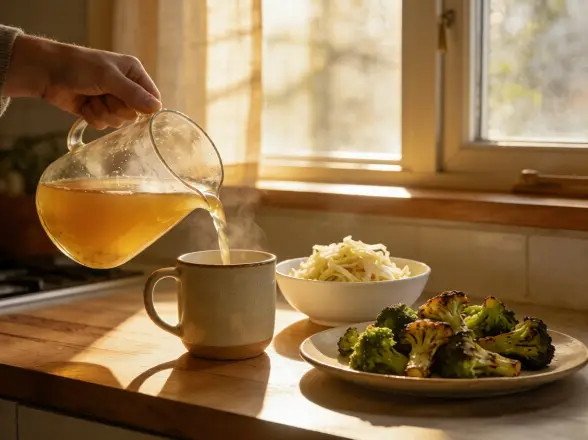
1. Fermented Foods
Sauerkraut, kefir, Bulgarian yogurt, and kimchi feed your gut microbiome, helping it make those anti-inflammatory secondary bile salts. Aim for 1–2 servings daily to support joint health.
2. Healthy Fats
Olive oil, avocado oil, fish oil, grass-fed butter, and grass-fed animal fats are rich in vitamin K2 and omega-3s—both powerful anti-inflammatories. They also help your body absorb fat-soluble vitamins (like D and K2) that support joints.
3. Vitamin D3-Rich Foods
Salmon, cod liver, and cod liver oil are excellent food sources of vitamin D3. While sunlight is the best source, these foods are perfect for winter or if you spend most of your time indoors. Remember: therapeutic doses (from supplements) may be needed for arthritis relief.
4. Sulfur-Rich Foods
Onions, garlic, and cruciferous vegetables (broccoli, cauliflower, Brussels sprouts) are high in sulfur—a nutrient your cartilage needs to stay strong. Sulfur also helps reduce inflammation in joints.
5. Collagen-Rich Foods
Bone broth is the best source of collagen—the main protein in cartilage. Regular meat (like hamburger or steak) only has 2–5% collagen (since we prefer tender cuts!), so adding bone broth to your diet is key. Aim for 1 cup daily to support joint repair.
Bonus: Tutka (Bile Salt Supplement)
If you struggle with severe arthritis, consider Tutka—a synthetic bile salt that reduces ER stress and shuts down inflammatory signals. It’s a game-changer for many people with joint pain, especially if you have a history of gallbladder issues or antibiotic use (which disrupts bile production).
Final Tips for Arthritis Relief
- Avoid iron overload: Too much iron (from supplements or iron skillets) can trigger inflammation. Men and postmenopausal women are especially at risk.
- Check for hidden infections: Old root canals or gum infections can leak bacteria into your bloodstream, worsening joint pain. See a dentist if you have chronic arthritis.
- Prioritize gut health: A healthy gut = healthy joints. Cut processed foods, eat fermented foods, and avoid the 7 inflammatory foods above.
Arthritis pain doesn’t have to control your life. By making simple changes to your diet—cutting out inflammatory foods and adding joint-supporting ones—you can reduce pain, calm inflammation, and support your body’s natural healing process. Give these tips a try, and let me know how they work for you!



U9chc
Bkvj
La vddd es interesante
Kamu cantik aulia
Kamu cantik aulia
Kamu ganteng aldani